
New Zealand's Specialist Hot Water Heat Pump Installer
Serving Wellington, Hutt Valley, Wairarapa, Kapiti, Horowhenua & Manawatu
Serving Wellington, Hutt Valley, Wairarapa, Kapiti, Horowhenua & Manawatu
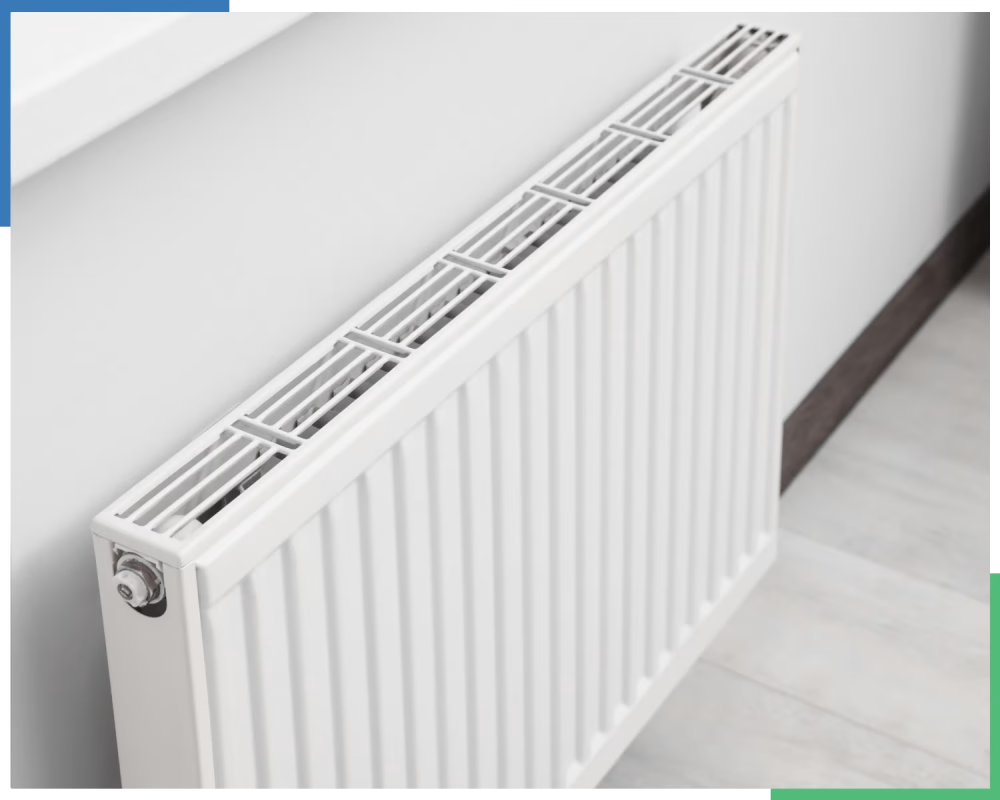
We design central heating systems around a centrally located hot water heat pump that distributes heating throughout your entire home. This makes it an efficient way of enjoying comfort in every room, not just one.
Most systems offer controls that allow you to heat different areas of the home to different temperatures.
Radiant systems use pipework and radiators or underfloor pipes to distribute hot water from the heat pump around the house.
These systems generally have no fan assistance, so the air doesn't move, and they're silent to operate. Radiator systems can be retrofitted in existing homes; underfloor systems need to be installed in the slab when the house is being built.

A2W are experts at supplying and installing radiant central heating systems. We work with you to understand your requirements and design a system that meets your needs and budget.
If you already have a radiant system with a gas boiler and would like to upgrade to a more efficient hot water heat pump, A2W can assist with that too.
Central heating provides heat to the interior of a building. The main components of a central heating system typically include a heat source (such as a boiler or hot water heat pump), a distribution system (such as radiators or vents), and controls (such as thermostats or timers). Heat is circulated through the distribution system to provide warmth to the desired areas, including underfloor.
Assessment: We begin by assessing the existing heating system and the building's requirements, including such factors as the size of the building, insulation levels, and desired heating capacity.
Design: Based on the assessment, we design a central heating system to suit the building.
Infrastructure modifications: Retrofitting a central heating system may require building infrastructure modifications. This can involve installing pipes for hot water systems and making adjustments to accommodate the heating equipment.
Installation of heating equipment: Install the hot water heat pump according to the design plan. Ensure proper ventilation and compliance with safety regulations.
Distribution system: Install the distribution system. This could involve installing radiators or underfloor heating systems.
Controls and thermostats: Install appropriate controls and thermostats to regulate the heating system. This allows for efficient and convenient temperature control throughout the building.
Testing and commissioning: After the installation, test the central heating system to ensure it operates correctly. Once complete, we would issue a Certificate of Compliance if required.
Yes, radiators provide a unique, "silent" radiant heat that many people find more comfortable, as it doesn't move air or allergens around. Radiators are also ideal for multi-storey homes where ducting through floors is difficult.
Yes. We specialise in "hydronic" upgrades where we replace your old, inefficient gas boiler with a modern air-to-water heat pump. This allows you to keep your existing radiators while reducing your carbon footprint and lowering running costs by up to 50%.
A standard retrofit typically takes 3 to 5 days, depending on the complexity of the pipework or ducting. New builds are integrated into the construction schedule. We aim for minimal disruption and will leave your home tidy at the end of each day.
We calculate the "kilowatt demand" for your entire house by looking at floor plans, window sizes, and insulation levels. This ensures the central unit is powerful enough to maintain a consistent 20°C throughout the home, even on the coldest Wairarapa nights.
Unlike single-room heat pumps, central heating ensures no "cold spots" in hallways or bathrooms. It provides a consistent, comfortable temperature throughout the whole building, is typically quieter than multiple individual units, and adds significant long-term value to your property.
Get in touch today for expert advice and product recommendations based on your requirements.




Privacy Policy | This site is protected by reCAPTCHA and the Google Privacy Policy and Terms of Service apply.
Thank you! We need your help. Would you share your experience on one of these sites?

