
New Zealand's Specialist Hot Water Heat Pump Installer

Serving Wellington, Hutt Valley, Wairarapa, Kapiti, Horowhenua & Manawatu

Hot Water Heat Pumps

How Heat Pump Water Heaters Save You Money

Upgrade your old unit to a modern hot water heat pump. Acting like a "reverse fridge," these systems harvest renewable energy from the surrounding air to provide sanitary hot water at a fraction of the cost.

Unlike traditional cylinders that generate heat directly (which is expensive), a heat pump simply moves heat. This process is incredibly efficient, often using 70% less electricity than standard cylinders. If you are looking for a significant electric water heater upgrade, this technology is the most effective way to slash your power bills and future-proof your home.
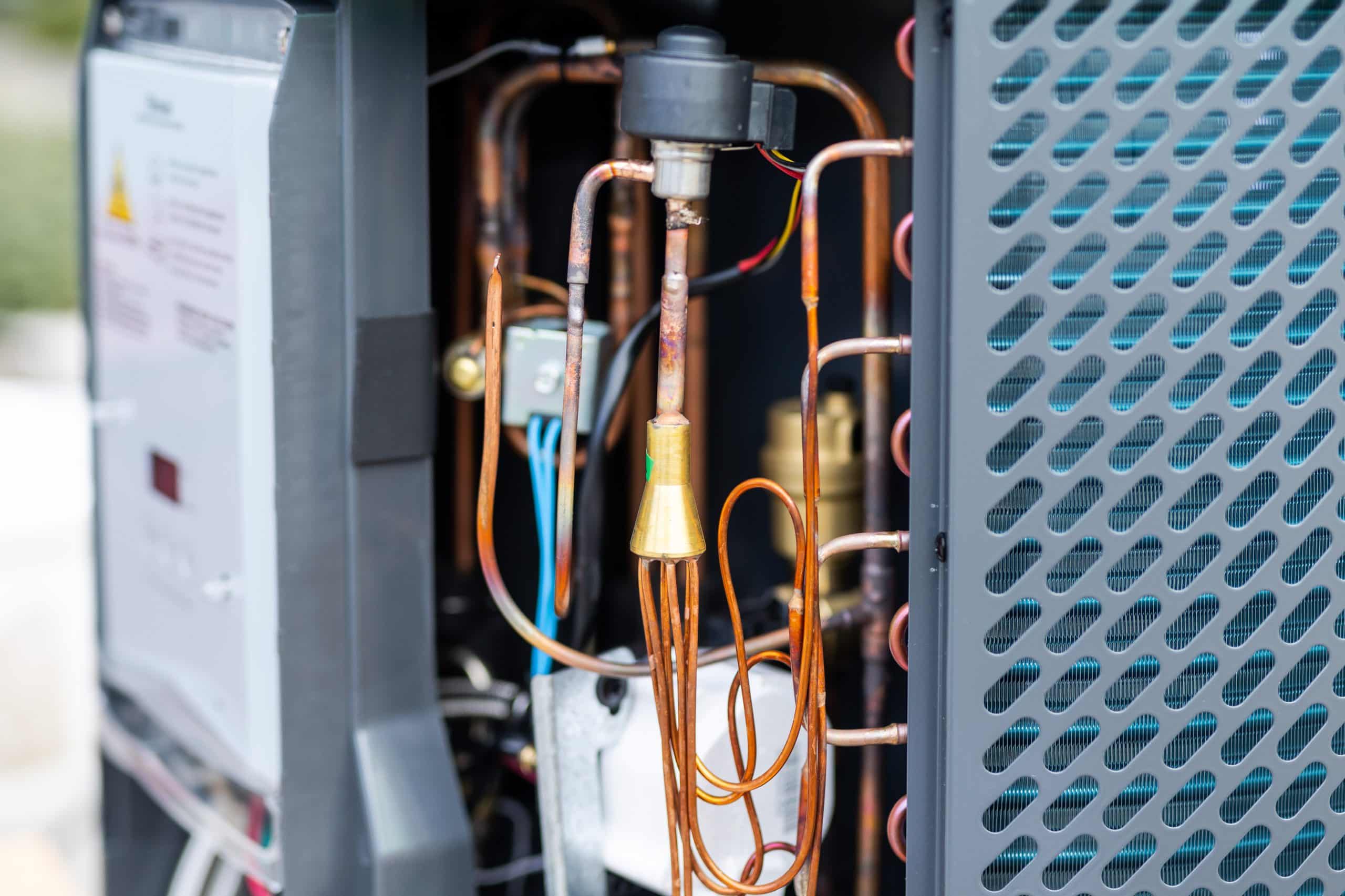
Close-up view of the internal copper piping, wiring, and components inside a modern water heater, showing intricate details of its heating and circulation system.

Choose Your System:
Split vs Integrated Hot Water Heat Pumps

When facing a hot water cylinder replacement, you generally have two main configuration options. The right choice depends on your available space, household size, and installation preferences.

Split Systems

  • Best for: Maximum flexibility and tight spaces.
  • Why choose it: Perfect if you want to keep the noise entirely outside or if you have a specific indoor spot for the cylinder you want to utilise.
  • Water cylinder can be installed inside or outside the home.
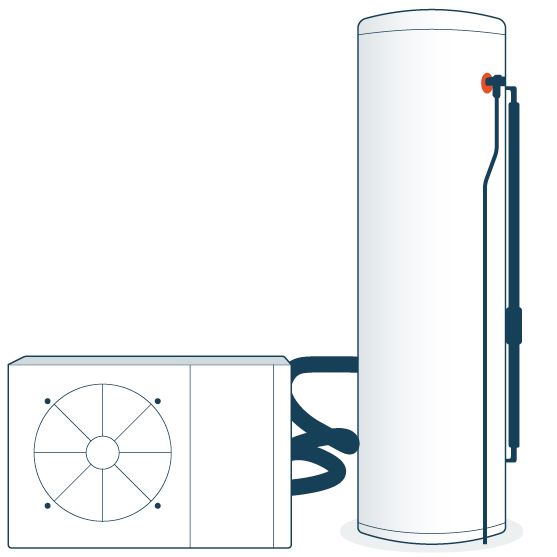
Minimalist illustration of a cylindrical water heater with a slightly wider top section, representing a modern tank design.

Integrated Systems

  • Best for: Simple "all-in-one" replacements.
  • Why choose it: Ideal if you are replacing an external gas or electric cylinder and want a clean, compact look without finding space inside the house.
  • Water cylinder is installed outside the home.

Which System is Right for You?

Your Concern

If you’re replacing an existing electric or gas cylinder and want a simple, cost-effective option

an integrated system is likely the best choice.

If you have a larger household and want maximum flexibility in where the components are installed

a split system may be the better fit.

Maximum Efficiency: Understanding COP Ratings

And What It Means For You

When comparing models, you will see the term COP (Coefficient of Performance). This is the gold standard for measuring efficiency.
Put simply, COP measures how much heat you get for the electricity you pay for.

  • Standard Electric Cylinder: COP of 1.0 (1kW of power = 1kW of heat).
  • Hot Water Heat Pump: Typically has a COP of around 4.0 (1kW of power = 4kW of heat).

Why does this matter? A higher COP means significantly lower energy bills and less strain on the electricity grid. At A2W, we ensure our systems are optimised for Wellington’s climate, ensuring high performance even when the outdoor temperature drops.
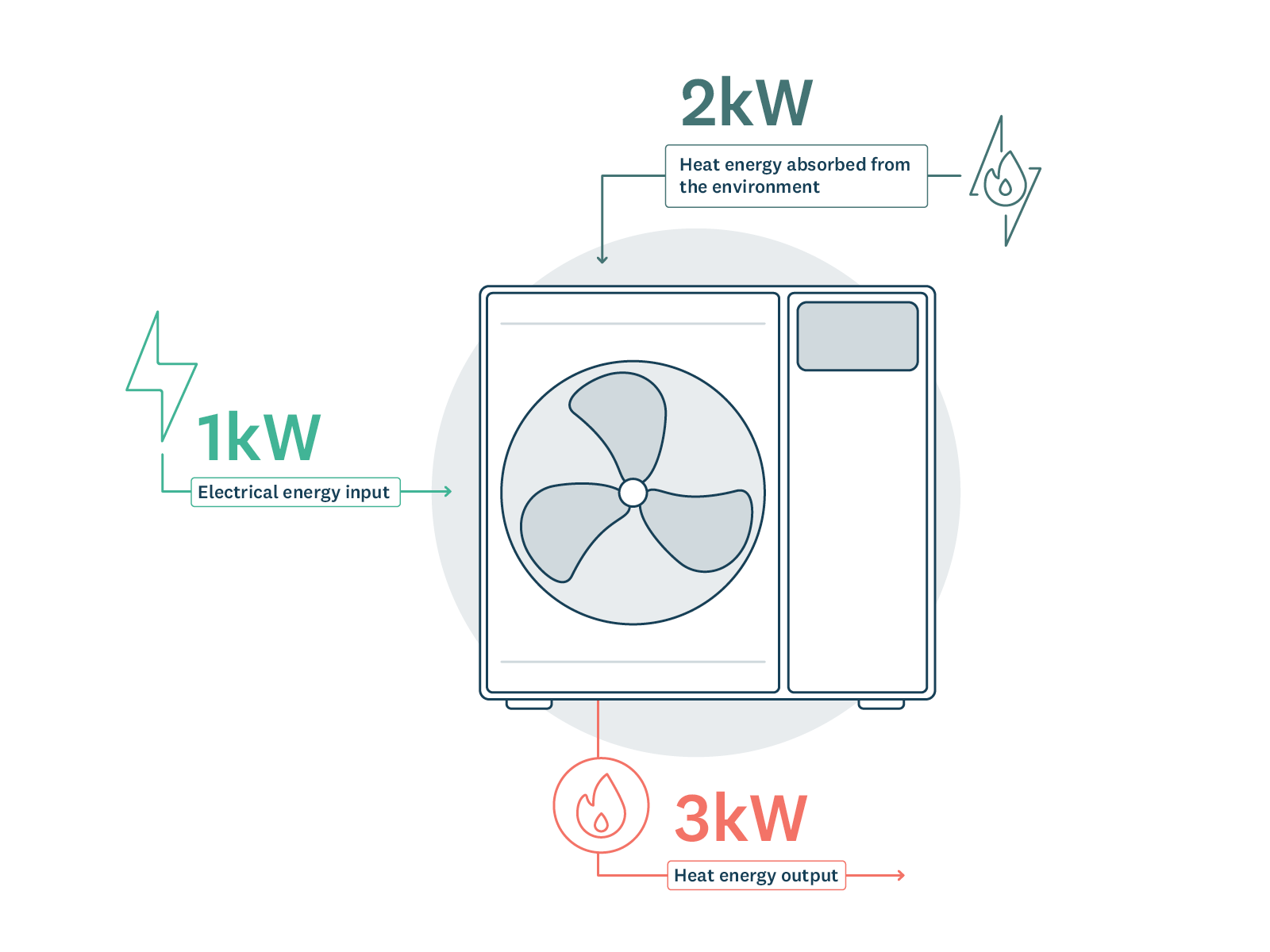

Diagram of a heat pump water heater system showing 1kW of electrical energy input combining with 2kW of heat energy absorbed from the environment to produce 3kW of heat energy output.

Why Does COP Matter?

A heat pump with a higher COP means:

Lower Energy Bills

You get more hot water while using less power.

Less Strain On Electricity Grid

More efficient heating reduces demand.

Better For The Environment

Less energy use means fewer carbon emissions.

What Affects A Heat Pumps COP?

Several factors can influence the COP of a hot water heat pump:

Outdoor temperature: Heat pumps work best in mild to warm conditions. Some models are designed to handle colder climates more efficiently.


Installation location: Proper airflow and positioning help maintain peak efficiency.


Water usage: Larger households using more hot water may benefit from a higher COP system to maximise savings.

What’s A Good COP Rating?

Most modern hot water heat pumps have a COP between 3 and 5, meaning they are 3 to 5 times more efficient than a standard electric water heater. When choosing a heat pump, it’s worth checking the COP rating to ensure you’re getting the best balance of efficiency and performance.

 Significant savings on power bills

A more sustainable, energy-efficient home

A reliable and cost-effective hot water system
Earth at the edge of green leaf lotus plant on natural dark background

Refrigerants & GWP (Global Warming Potential)

What You Need To Know

Efficiency isn't just about electricity; it's also about the refrigerant inside the unit. New Zealand is actively phasing out older, high-GWP refrigerants like R134a in favour of eco-friendly alternatives.

At A2W, we prioritise systems using R290 (Propane) or CO₂ (Carbon Dioxide).

  • Future-Proof: These refrigerants meet strict new environmental standards.
  • Higher Efficiency: R290 and CO₂ transfer heat more effectively, often resulting in a better COP.
  • Ultra-Low Impact: Compared to older refrigerants, which have a high Global Warming Potential (GWP), these modern options have a GWP of close to 1, effectively minimising your carbon footprint.

What is GWP?

GWP (Global Warming Potential) measures how much heat a refrigerant traps in the atmosphere compared to carbon dioxide (CO₂), which has a GWP of 1. The lower the GWP, the better it is for the environment.

Why is New Zealand Phasing Out R134a?

New Zealand is actively reducing the use of high-GWP refrigerants like R134a (GWP ~1,430) due to its significant environmental impact. While it was commonly used in older heat pumps, it’s now being phased out in favor of greener alternatives.

A2W’s Preferred Refrigerants – R290 & CO₂

At A2W, we prioritize systems that use R290 (propane) or CO₂ (R744) because they are:

More energy efficient – These refrigerants transfer heat more effectively, reducing power consumption.

Better for the environment – They have ultra-low GWPs, meaning minimal impact on climate change.

Future-proof – With stricter regulations on high-GWP refrigerants, choosing a low-GWP system now ensures long-term compliance.


REFRIGERANT GWP EFFICIENCY ENVIRONMENTAL
CO₂ (R744) 1 Excellent Low Impact
R290 (Propane) ~3 Very High Low Impact
R32 675 High Moderate
REFRIGERANT GWP EFFICIENCY ENVIRONMENTAL
R134a (Being phased out) ~1,430 Moderate High Impact

What This Means for You

By choosing an R290 or CO₂ heat pump, you’re getting:
Lower running costs due to better energy efficiency

A more sustainable choice with minimal environmental impact


A future-proof system that meets New Zealand’s refrigerant standards

Service Areas: Wellington, Manawatu & Wairarapa

We are proud to be the region's specialist installers. We can design a comprehensive retrofit hot water system for your existing home, or provide expert installation for new builds in:

Request Your Free Hot Water Assessment

Not sure which system fits your home? Our Wellington experts will assess your current setup, water usage, and physical space to calculate your potential savings—no obligation required.

What is GWP?

GWP (Global Warming Potential) measures how much heat a refrigerant traps in the atmosphere compared to carbon dioxide (CO₂), which has a GWP of 1. The lower the GWP, the better it is for the environment.

Why is New Zealand Phasing Out R134a?

New Zealand is actively reducing the use of high-GWP refrigerants like R134a (GWP ~1,430) due to its significant environmental impact. While it was commonly used in older heat pumps, it’s now being phased out in favor of greener alternatives.

A2W’s Preferred Refrigerants – R290 & CO₂

At A2W, we prioritize systems that use R290 (propane) or CO₂ (R744) because they are:

More energy efficient – These refrigerants transfer heat more effectively, reducing power consumption.

Better for the environment – They have ultra-low GWPs, meaning minimal impact on climate change.

Future-proof – With stricter regulations on high-GWP refrigerants, choosing a low-GWP system now ensures long-term compliance.


REFRIGERANT GWP EFFICIENCY ENVIRONMENTAL
CO₂ (R744) 1 Excellent Low Impact
R290 (Propane) ~3 Very High Low Impact
R32 675 High Moderate
REFRIGERANT GWP EFFICIENCY ENVIRONMENTAL
R134a (Being phased out) ~1,430 Moderate High Impact

What This Means for You

By choosing an R290 or CO₂ heat pump, you’re getting:
Lower running costs due to better energy efficiency

A more sustainable choice with minimal environmental impact


A future-proof system that meets New Zealand’s refrigerant standards

Get In Touch

Please fill in the details below for a free consultation.
Contact Form New

Online Estimate

Terms & Conditions:

  1. Please note that this is a “site unseen” estimate only.   
  2. If you accept the estimate, we will arrange a site visit and confirm final pricing in a written quote.
  3. The estimate does not constitute an agreement to provide goods or services at the estimated price.

 | © All rights reserved | Designed by Numero Branded Logo

Get in touch

Send us a quick message and we will get back to you as soon as possible.
Contact Form New

Online Estimate

Terms & Conditions:

  1. Please note that this is a “site unseen” estimate only.   
  2. If you accept the estimate, we will arrange a site visit and confirm final pricing in a written quote.
  3. The estimate does not constitute an agreement to provide goods or services at the estimated price.

Privacy Policy | This site is protected by reCAPTCHA and the Google Privacy Policy and Terms of Service apply.

Thank you! We need your help. Would you share your experience on one of these sites?