
New Zealand's Specialist Hot Water Heat Pump Installer
Serving Wellington, Hutt Valley, Wairarapa, Kapiti, Horowhenua & Manawatu
Serving Wellington, Hutt Valley, Wairarapa, Kapiti, Horowhenua & Manawatu
Living in Wellington means adapting to the elements, and choosing the right hot water heating is part of that adaptation. If you are considering hot water heat pumps in Wellington, you might wonder how the local wind and salt air affect the equipment. We often hear concerns about how outdoor units handle our specific coastal environment.
We want to clarify the facts. Installing these systems is a practical solution for the region. These systems are designed to work efficiently in New Zealand’s climate. They can handle coastal conditions effectively, provided they are installed thoughtfully. At A2W, we rely on data and manufacturer specifications to ensure that hot water heat pumps in Wellington last the distance.
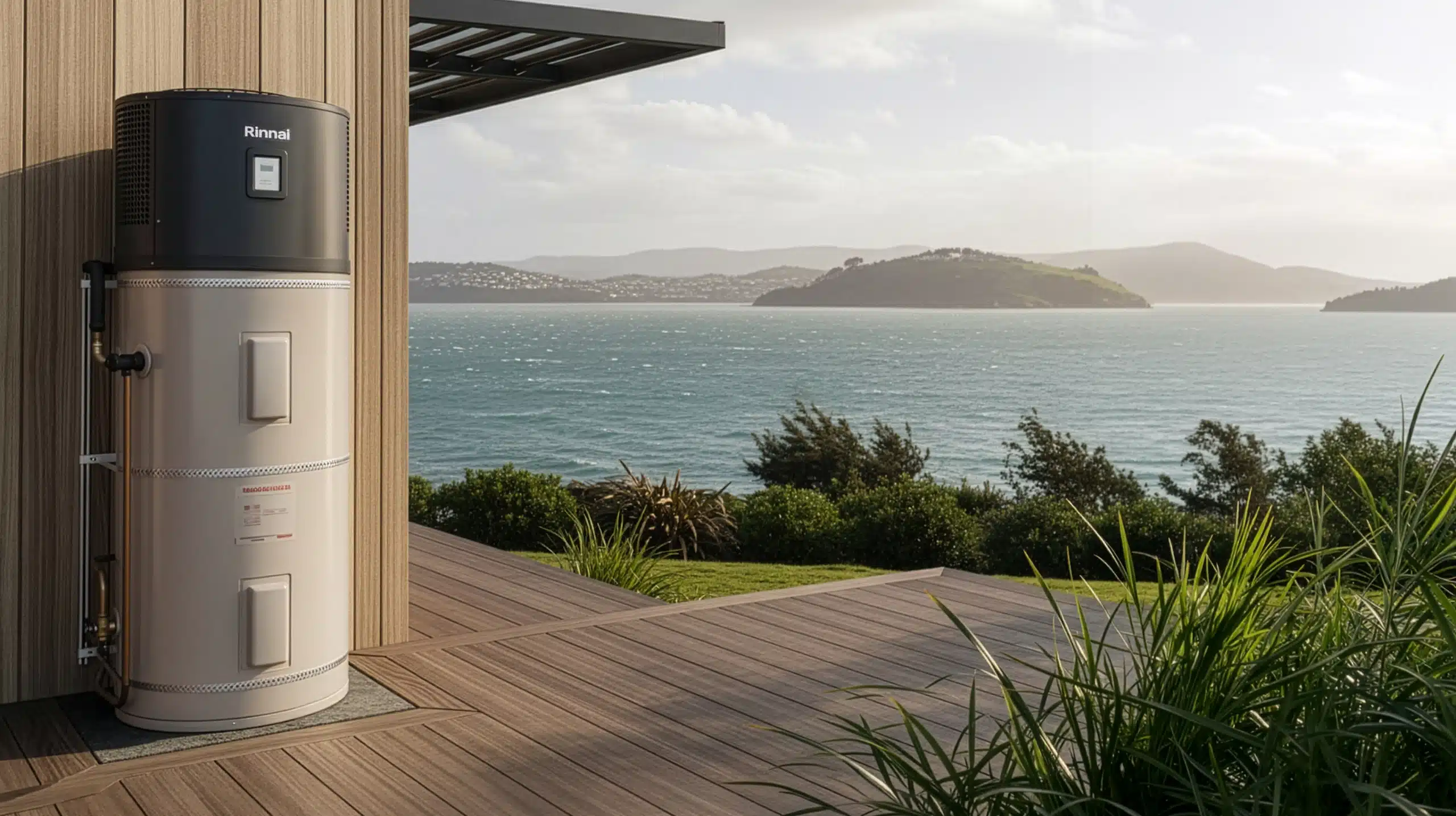
Traditional hot water cylinders use a significant amount of electricity. In comparison, hot water heat pumps (HWHPs) offer major savings. For example, the Rinnai HydraHeat can reduce water-heating energy use by up to ~75%.
This efficiency makes a massive difference to your monthly power bill, which is why hot water heat pumps in Wellington are becoming so popular.
But efficiency means nothing if the unit cannot handle the weather. This is where the engineering of hot water heat pumps in Wellington matters. The units we recommend are engineered specifically for NZ conditions.
They are rated to operate in temperatures ranging from –10 °C to +42 °C. This wide operating range confirms they are built to perform even when the local weather hits extremes. Because they are specified as suitable for coastal locations, hot water heat pumps in Wellington remain a cost-effective and low-carbon way to heat water, even in wind and salt-exposed environments.
When we discuss hot water heat pumps in Wellington, we need to separate genuine risks from myths. Living near the sea does present challenges, but they are manageable with the right knowledge.
Salt-laden air and sea spray impact exposed metal. This is the primary concern for any outdoor appliance near the coast. When inspecting hot water heat pumps in Wellington, you might notice:
Salt deposits and moisture settling on surfaces can accelerate rust. This is especially true for components made from unprotected steel. Over time, a build-up of salt and debris could impair airflow or drainage around the outdoor unit. This happens if the installation of hot water heat pumps in Wellington is not sheltered and well-ventilated.
There is a common fear regarding “fin-rot.” This refers to aluminium fin corrosion on the coil due to salt air. However, this fear is largely irrelevant to the HWHP coil designs used in NZ-spec units.
Modern hot water heat pumps in Wellington use different engineering compared to older air conditioners. These systems use thicker, robust coil tubing. They are built specifically to withstand outdoor exposure under NZ conditions.
Older air-to-air heat pumps pass large volumes of air continuously to heat a house. That is where fin-rot is a real risk. In contrast, HWHP coils are not as vulnerable. They do not pass the same massive volume of air constantly.
As a result, internal coil failure due to salt is not a standard failure mode for modern hot water heat pumps in Wellington, like the Rinnai HydraHeat, when properly installed and maintained.
We look for specific technical traits when choosing hot water heat pumps in Wellington. The Rinnai HydraHeat stands out because it is explicitly advertised as “designed for New Zealand climatic conditions… as well as coastal locations.”
The system uses R290 refrigerant. It uses a very small amount—just 150 g. This allows it to offer high efficiency while meeting local safety regulations. Under standard operating conditions, it achieves a Coefficient of Performance (COP) of ~ 4.7.
This level of efficiency is significant.
It means the system produces significantly more heat energy than the electrical energy it consumes. The system is also MEPS-compliant and engineered to NZ standards. This implies a design suited for typical NZ weather, including the possible coastal exposure we see here. It is a key reason why we recommend these specific hot water heat pumps in Wellington.
Even with high-quality specs, placement matters. Just like any outdoor installation by the sea, the HydraHeat should not be placed where it faces prevailing salt spray or winds directly without some shelter.
Manufacturer guidelines are clear on this. They recommend a protected, well-ventilated spot. This prevents salt from accumulating on the evaporator coil or other exposed parts. When we install hot water heat pumps in Wellington, we follow these guidelines strictly to protect your investment.
To maximise the lifespan and performance of an HWHP near the coast, we follow a specific set of practices. These steps ensure hot water heat pumps in Wellington remain reliable.
We must install the unit in a sheltered location. It needs to be out of direct salt spray and prevailing winds. We can achieve this using:
Even a small amount of shelter helps a lot. It reduces the amount of salt that hits the unit directly. This is standard practice for hot water heat pumps in Wellington.
While shelter is important, airflow is equally vital. We ensure good ventilation and clearance around the head unit. This allows air to flow freely. Good airflow prevents salt from settling on surfaces and stops ventilation from becoming blocked, which is crucial for hot water heat pumps in Wellington.
We use corrosion-resistant fixings where possible. We focus on stainless steel brackets or coated hardware. We pay special attention to base trays, mounts, fasteners, and exterior panels. Using the right materials prevents the cosmetic corrosion mentioned earlier.

Once installed, a little care goes a long way. Maintaining hot water heat pumps in Wellington is straightforward.
You should periodically hose down the unit with fresh water.
The goal is to gently wash off salt deposits from surfaces. Regular Servicing
Regular servicing and checks are important. We ensure air intakes are clear and that drainage or condensate drains are functioning correctly. We also check that there is no visible rust or build-up. This proactive approach keeps hot water heat pumps in Wellington running smoothly.
While we focus on the exterior, we also check the water supply. If your water supply is hard, acidic, or outside recommended parameters, it must be treated or filtered. This is relevant to internal corrosion rather than salt air, but it is a crucial part of the overall health of hot water heat pumps in Wellington.

We know that hot water heat pump performance in windy Wellington is a top priority for homeowners. By choosing a unit with a wide operating temperature range (-10 °C to +42 °C), you ensure the system works when you need it most.
The wind and salt do not have to be a barrier. With the right installation strategies, these units deliver consistent hot water. The savings of up to ~75% on energy use make the switch to hot water heat pumps in Wellington compelling.
Many homes here are on slopes. Installing hot water heat pumps on hillside properties in NZ requires the same attention to shelter. Hills often accelerate wind speed. By positioning the unit behind a windbreak or under a deck, we mitigate the wind’s impact. This ensures the fan and coil operate without unnecessary strain.
The shift to R290 refrigerant is a key part of the story. Using just 150 g of this refrigerant allows for a design that is safe and efficient. It meets energy-efficiency regulations while delivering a COP of ~ 4.7. This high performance is why we consider units like the Rinnai HydraHeat and Carrier Blue.
The fear of failure due to salt is often based on outdated experiences with different types of machines. Modern HWHPs are built differently. They use robust coil tubing. They are designed for our environment. This is why hot water heat pumps in Wellington are a smart choice today.
Switching to hot water heat pumps in Wellington offers clear advantages:
We understand the local conditions. We know that salt spray and wind are factors. But we also know that with corrosion-resistant fixings and a sheltered location, hot water heat pumps in Wellington thrive.
The success of hot water heat pumps in Wellington comes down to the details. It is about more than just the machine. It is about where it is placed and how it is maintained.
These simple steps prevent the build-up of salt and debris that could impair airflow.
You can rely on these systems. They are a practical, low-carbon way to heat water. The combination of high savings and robust design makes them ideal for our region.
We are confident in the products we install. We know that hot water heat pumps in Wellington are the future of efficient water heating. The technology has advanced to meet our specific needs. If you are considering this upgrade, look at the specs. Look for the “designed for NZ conditions” label. Look for R290 refrigerant. These are the markers of a modern, efficient system. With regular checks and proper installation, you will enjoy reliable hot water for years because modern hot water heat pumps in Wellington are tougher than ever.




Privacy Policy | This site is protected by reCAPTCHA and the Google Privacy Policy and Terms of Service apply.
Thank you! We need your help. Would you share your experience on one of these sites?

