
New Zealand's Specialist Hot Water Heat Pump Installer
Serving Wellington, Hutt Valley, Wairarapa, Kapiti, Horowhenua & Manawatu
Serving Wellington, Hutt Valley, Wairarapa, Kapiti, Horowhenua & Manawatu
Having reliable hot water at home is essential, especially as energy costs rise and older systems age. Many New Zealanders are now searching for better ways to heat water without high running costs or gas reliance, often researching the different types of hot water heat pumps to find the best fit.
And we get it. We’ve seen how high power bills can get nowadays. We’re here to help you out!
At A2W, we specialise in air-to-water heat pumps designed for Kiwi homes. These systems provide consistent performance, lower energy use, and excellent long-term value. If you’re still unsure which types of hot water heat pumps are perfect for your home, read on!
In this article, we’ll discuss:
Water heating makes up a large portion of home energy bills. As gas prices increase and sustainability goals become more important, households are moving towards electricity-based solutions that use less power.
However, it is important to distinguish between standard cylinders and the various types of hot water heat pumps that use less power.
Heat pump systems stand out because they transfer heat rather than create it. At A2W, our focus on air-to-water technology helps New Zealand homeowners achieve efficient, reliable water heating across different climates.
Every home needs reliable hot water, but the type of system you use depends on where you live, how many people are in your household, and your energy choices. In New Zealand, the main options are air-to-water heat pumps, standard electric hot water cylinders, and several types of hot water heat pumps, such as gas systems.
A few rural properties use geothermal systems, but these are rare across the country. Most New Zealand homes still use electric or gas systems, though specific types of hot water heat pumps, specifically, air-to-water heat pumps, are quickly becoming the top energy-efficient choice.
Each system works in its own way and comes with different costs and maintenance needs.
Air-to-water systems take heat from the outside air and use a refrigerant cycle to warm water in a cylinder. When comparing types of hot water heat pumps, air-to-water models are often favoured because they require no ground digging.
Why more NZ homes are switching to this system:
Electric cylinders are still the most common hot water system in New Zealand homes. They use electric elements inside the tank to heat water directly. These systems are simple and familiar, but not the most energy-efficient.
What homeowners should know:
Gas systems heat water by burning natural gas or LPG, either instantly or in a cylinder. They provide quick hot water, but are becoming less popular because of higher costs and environmental concerns.
Considerations for NZ households:
For most homeowners, air-to-water heat pumps offer the best mix of affordability, energy savings, and easy installation among several types of hot water heat pumps. They are as simple as electric systems, but much more efficient, and do not rely on fossil fuels like gas heating.
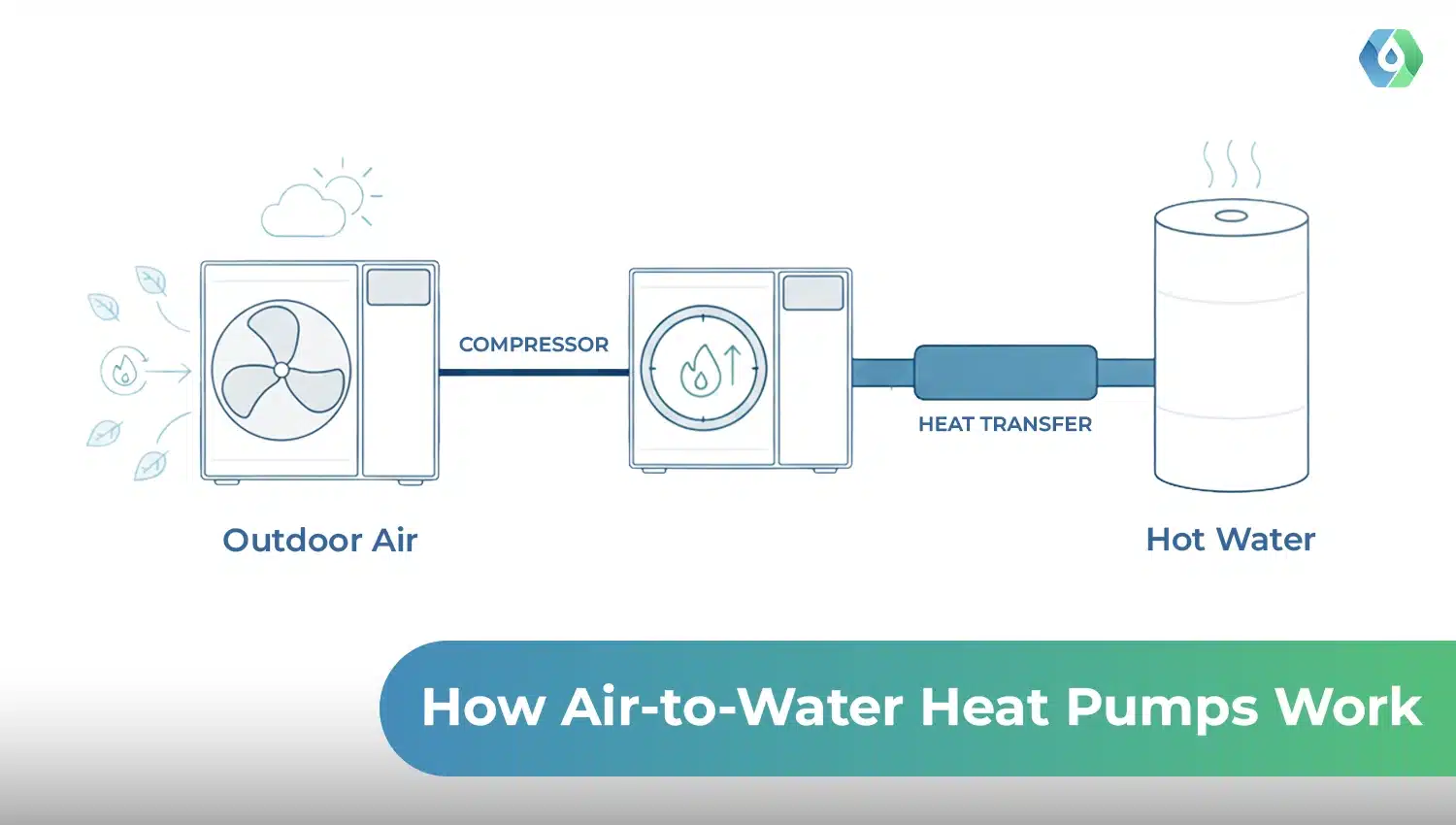
An air-to-water heat pump draws warmth from the air outside and transfers it into water. Even when outdoor temperatures fall, there’s still enough energy in the air for the system to use. A compressor boosts that heat, sending it into a storage cylinder for household use.
This process is efficient because the pump doesn’t generate heat directly. It moves existing heat, reducing the amount of power needed.
A2W’s systems are selected for New Zealand conditions. Whether you live in Wellington, Hutt Valley, Wairarapa, Kapiti, Horowhenua, or Manawatu, the units maintain strong performance year-round. They’re built to handle cooler temperatures and operate efficiently across both islands.
A split system has the compressor outdoors and the water cylinder indoors or outside. This separation gives flexibility in placement and works well when there is limited outdoor space available or if the water supply needs to be centrally located within the home.
Advantages of a split heat pump system:
An integrated or all-in-one unit combines the compressor and cylinder in one outdoor unit. It’s compact, tidy, and quick to install.
Benefits of an integrated heat pump system:
Both types of hot water heat pumps perform efficiently, but the right choice depends on your home layout and preferences.
| Installation flexibility | Outdoor and indoor components | All-in-one outdoor unit |
| Noise | Very quiet | Slight outdoor sound |
| Servicing | Components serviced separately | The entire unit is serviced together |
| Ideal for | Homes with indoor cylinder space | Homes with limited space |
Efficiency depends on the specific model rather than the layout alone. For example, A2W supplies integrated units with COP ratings around 4.2 and split units with COP ratings up to 5.2, ensuring both types of hot water heat pumps deliver great savings.
The Coefficient of Performance (COP) measures efficiency—the ratio of heat produced to electricity used. Most A2W systems operate in the COP 3–5 range. That means for every kilowatt of electricity, they can produce three to five kilowatts of heat.
Suppose you’re comparing electric cylinders, gas systems, and various types of hot water heat pumps. In that case, you’ll find that air-to-water heat pumps rank among the most energy-efficient options available, especially with New Zealand’s renewable electricity supply.
Electric cylinders are still the most common way to heat water in New Zealand homes. They use electric resistance elements to heat water stored in a tank.
Key points for households:
Gas hot water systems heat water by burning gas, either instantly or with a storage cylinder. They work quickly, but have become less affordable in recent years.
Here’s the kicker: monthly gas line charges or bottle rentals can sometimes cost more than the gas itself. With rising gas network fees and New Zealand’s focus on renewable energy, gas is becoming a less practical long-term choice for households.
Air-to-water heat pumps are better than electric and gas systems because they provide cleaner and more efficient heating. While there are many types of hot water heat pumps globally, the air-to-water style is uniquely suited for NZ’s retrofit market.
Advantages include:

New Zealand’s weather can be unpredictable. A single week might bring warm afternoons, coastal humidity, and sudden temperature drops at night. A2W’s models are tested for year-round reliability, keeping water temperatures stable even when the air outside changes.
They include automatic defrost cycles that prevent ice buildup on coils during frosty mornings, helping the system maintain performance without manual resets.
For New Zealand homes, this flexibility means less wasted energy and steady comfort in every region, from Wellington’s windy coastal suburbs to the colder inland areas of Wairarapa.
Why this matters to Kiwi homeowners:
Together, these advantages make air-to-water systems the best hot water heating system for the NZ climate, delivering steady, energy-efficient hot water no matter the season.
An integrated all-in-one heat pump water heater puts the compressor and cylinder together in one outdoor unit. This design is not just compact; it is also practical for installers and homeowners who want efficiency and a tidy setup.
Builders often recommend this layout for modern or smaller homes because it removes the need to find indoor space for a cylinder. Homeowners appreciate the faster installation, minimal pipework, and clean exterior appearance.
Key benefits for NZ homeowners and builders:
Whether you’re renovating or starting a new build, this design provides a practical solution that balances performance, ease of use, and modern style. It’s an ideal choice where space and efficiency must work together.
We focus on solutions that perform in real local weather, not just in controlled testing. We don’t just sell any types of hot water heat pumps; we sell units designed for homes throughout Wellington, Hutt Valley, Wairarapa, Kapiti, Horowhenua, and Manawatu. Each installation comes with clear advice, fixed-price quotes, and reliable support from our local team.
A2W systems include whisper-quiet compressors and precise temperature control, offering dependable hot water without unwanted noise. The efficiency levels of up to COP 5.2 show how effectively these types of hot water heat pumps are at converting electricity into heat.
We believe in transparent service and long-term reliability. With local maintenance and trusted models, our goal is to make energy-efficient water heating simple and cost-effective for every Kiwi home.
Air-to-water heat pumps have become a practical and proven choice for New Zealand households. When reviewing the different types of hot water heat pumps available, A2W offers the best mix of performance and value.
At A2W, we’re committed to bringing the best performance possible to homes across our regions. By choosing one of our specific types of hot water heat pumps, you can enjoy reliable hot water year-round while lowering energy use and supporting a cleaner future.



Privacy Policy | This site is protected by reCAPTCHA and the Google Privacy Policy and Terms of Service apply.
Thank you! We need your help. Would you share your experience on one of these sites?

