
New Zealand's Specialist Hot Water Heat Pump Installer
Serving Wellington, Hutt Valley, Wairarapa, Kapiti, Horowhenua & Manawatu
Serving Wellington, Hutt Valley, Wairarapa, Kapiti, Horowhenua & Manawatu
If you’ve been looking into upgrading your home’s energy systems, you’ve probably come across the term “heat pump” used in ways that seem to describe completely different things.
And you’d be right to be confused, because they are different things.
Hot water heat pumps heat the water that comes out of your taps and showers. In comparison, space heating heat pumps heat the air inside your rooms. Both use the same underlying technology, but they solve different problems. Buying the wrong one first can mean spending money on something that doesn’t actually fix your biggest cost.
Here’s how to work out which upgrade makes sense for your home. and which should come first.
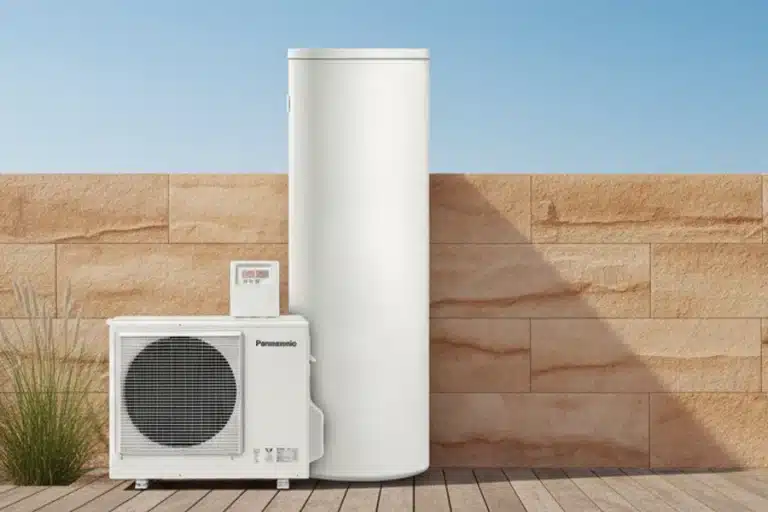
Quick definition: A hot water heat pump is a system that uses ambient air and heat pump technology to heat the water used in your home for showers, taps, baths, and appliances.
A hot water heat pump, also called a heat pump water heater or air-to-water hot water system, pulls warmth from the surrounding outdoor air and transfers it into a storage cylinder to heat your household water supply. It works like a “reverse fridge” by moving heat rather than creating it directly.
Hot water heat pumps are around three to four times more efficient than conventional electric resistance hot water cylinders, often using about 70 percent less electricity than standard cylinders.
They come in two main configurations:

Quick definition: A space heating heat pump is a system that warms or cools indoor air to improve room comfort, rather than heating the home’s water supply.
A space heating heat pump, often called an air-to-air heat pump or home heating heat pump, conditions the air inside your home. It heats rooms in winter and can cool them in summer.
These systems range from single wall-mounted units that treat one room to ducted heat pump systems that distribute conditioned air throughout the whole house via ceiling vents. A central heating heat pump may also connect to radiators or underfloor heating via an air-to-water circuit.
| Hot Water Heat Pump | Space Heating Heat Pump | |
|---|---|---|
| Main purpose | Heats tap and shower water | Heats or cools indoor air |
| What it replaces | Electric cylinder or gas water heater | Electric heater, gas fire, or old heat pump |
| Best for | High hot water use, old cylinders, or gas systems | Cold rooms, poor insulation, year-round comfort |
| Typical bill reduction | Up to 60–70% off water heating costs | Varies by home; significantly less than resistance heating |
| Can cool the home | No | Yes (air-to-air models) |
| Affects showers and taps | Yes | No |
| Affects room temperature | No | Yes |
| Installation location | Outdoor unit + cylinder (inside or outside) | Outdoor unit + indoor wall unit or ducted system |
Hot water heating makes up about a third of the average New Zealand household’s energy use. Installing the right system can significantly reduce that amount.
Homes with higher occupancy or higher hot water use will save more energy and more money than the average household, resulting in a better return on investment. If you’ve got a family of four burning through multiple showers every morning, a heat pump for hot water will likely deliver a far more visible change to your power bill than any other single upgrade.
Old resistance cylinders are inefficient by design since they heat water by passing electricity through an element, using every watt they draw. A modern air-to-water hot water system does the same job using a fraction of the electricity.
Gas is no longer the cheaper alternative it once was. According to Consumer NZ, the average unit price of gas has risen by 54% from 2023 to 2025, and it is only forecast to continue rising. Switching away from gas water heating is a financially sensible decision.
If the house feels warm enough but the power bills are high, hot water is often the culprit. Prioritising a hot water upgrade here will deliver faster, more measurable returns than adding another layer of space heating.
A space heating heat pump is the right tool when the problem is room temperature, not water temperature. Wall-mounted air-to-air heat pumps are effective for main living areas.
A ducted heat pump system works well for homes where whole-house coverage matters, distributing consistent warmth across multiple rooms via ceiling vents.
Air-to-air heat pumps work in both directions. In summer, they can cool the same rooms they heat in winter, which is something a hot water heat pump simply doesn’t do.
For homes that need even temperatures across multiple rooms and floors, a central heating heat pump linked to radiators or underfloor circuits, or a ducted system, is worth considering.
A2W’s central heating offer covers both ducted and radiator-based systems, depending on what suits your home.
Heat pump water heaters use heat pump technology, meaning they work similarly to space heating heat pumps. However, instead of heating air, they pull heat from the air around them and use it to warm water in tanks for bathrooms, kitchens, laundry, and household hot water demand.
A space heating heat pump heats indoor air in rooms to provide daily comfort, and seasonal heating or cooling.
Buyers often compare them because both use heat pump technology, but they address different household needs. While both technologies are highly efficient because they move heat rather than generate it, water heating vs space heating are fundamentally separate household functions, each requiring its own dedicated system.
While a heat pump water heater can cool and dehumidify the surrounding space slightly during operation, its main job is still water heating, not whole-home comfort.
Choosing between hot water vs home heating depends entirely on what’s driving your power bill right now.
These systems can use 50 to 70 percent less electricity than traditional electric cylinders and gas systems, depending on the setup.
Space heating heat pumps are usually more efficient than direct electric resistance heating because they move heat rather than generate it directly. They also provide an additional function by cooling a room in reverse mode.
If hot water is your biggest cost driver, prioritise that. If your home is hard to heat and comfort is your top priority, start with space heating.
Need a second opinion? A2W can assess your home and tell you where the biggest gains are.
Hot water heat pump installation comes in three pathways:
It is generally easier to retrofit or install hot water heat pumps to standalone homes, given the outdoor space required and plumbing requirements.
Space heating heat pump installation options include:
Some homes are better suited to one upgrade before the other. Layout, existing services, available outdoor space, and budget all affect the right sequence. A2W offers both product lines and can advise on the right order for your specific situation.
Standard air-to-air heat pumps don’t heat tap water. And a hot water heat pump won’t warm your lounge. These are separate systems for separate jobs.
That said, some air-to-water systems can serve both domestic hot water and space heating via radiators or underfloor circuits. If you want a single system to cover both functions, that’s a conversation worth having, but it requires careful design and the right setup.
A2W offers central heating solutions that can work alongside or integrate with hot water systems, depending on your home’s layout and goals.
Prioritise hot water if:
Prioritise space heating if:
Plan both if you want a full efficiency and comfort upgrade, which is exactly where A2W’s offer becomes valuable, covering hot water, air-to-air, ducted, and central heating systems under one roof.
We specialise in hot water heat pumps, but our offer doesn’t stop there. We also install air-to-air heat pumps, ducted systems, radiators, and central heating, so if your home needs both upgrades, you’re working with one team from start to finish.
Our New Zealand team understands local conditions, common home styles, and how coastal or elevated sites affect installation decisions. That local knowledge makes a real difference to how a system performs long-term.
Not sure where to start when considering a hot water heat pump vs heat pump? A2W can assess your home and recommend the upgrade that’ll make the biggest difference first. Get a fixed-price online estimate without needing a site visit.
A standard heat pump heats or cools the air inside your home. A hot water heat pump uses the same underlying technology but instead transfers heat into a water storage cylinder, supplying your taps, showers, and appliances.
Yes, particularly for households with older cylinders, gas systems, or medium-to-high hot water demand. Hot water heat pumps can be around 60% cheaper to run than electric resistance hot water cylinders or gas water heating. With New Zealand’s renewable electricity grid, they also significantly reduce household emissions.
No, a standard air-to-air space heating heat pump cannot heat your household water supply. To heat your shower and tap water, you need a dedicated hot water heat pump connected to a storage cylinder.
It depends on where your current power bill goes. Hot water heating makes up about a third of the average New Zealand household’s energy use. So if you’re on a resistance cylinder or gas, a hot water heat pump often delivers the clearest and fastest return. If your home is hard to heat, a space heating upgrade may make more sense first.
If your cylinder is over 10 years old, you’re on gas, or see medium-to-high hot water usage, yes, it’s worth strongly considering. The reduction in running costs is significant, and modern systems are well-suited to New Zealand conditions throughout all seasons.
For whole-home comfort, a ducted heat pump system or a central heating heat pump linked to radiators or underfloor heating is worth considering. The right option depends on your home’s layout, insulation, and existing infrastructure. A2W can assess your situation and recommend the most practical path forward.




Privacy Policy | This site is protected by reCAPTCHA and the Google Privacy Policy and Terms of Service apply.
Thank you! We need your help. Would you share your experience on one of these sites?

